


Everyone’s talking about AI like it’s a magic money machine. Scroll for three minutes and you’ll see someone claiming they made $10,000 last month using ChatGPT in their pajamas, or swearing their faceless YouTube channel prints passive income while they sleep.
Here’s what nobody tells you: some of these opportunities are real. Some are half-truths wrapped in hype. And some are complete nonsense designed to separate you from your money.
I’m not here to sell you a dream or shame you for wanting easier income options. I’m here because I’ve spent the last year digging into what actually works for people who don’t have endless energy, who can’t show up perfectly every single day, and who need income options that bend around life instead of demanding life bend around them.
So let’s cut through the noise. Let’s talk about what’s real, what’s exaggerated, and what you can actually do on the days when getting out of bed feels like a victory.
Why Everyone Suddenly Cares About AI Side Hustles

A few years ago, starting an online business meant learning complicated software, hiring designers, or spending hours creating content from scratch. You needed specific skills or money to outsource. Most people were locked out.
Then AI tools got ridiculously easy to use. You didn’t need to be a designer, writer, or coder anymore. At the same time, people got tired of traditional work structures. The pandemic proved working from home was possible. More people started questioning why they spent 40+ hours a week making someone else rich while barely covering their own bills.
AI removed the old gatekeepers. It made micro-business creation accessible to regular people who just wanted a shot at better income without a business degree or huge investment.
That’s the good news. The bad news? When something becomes accessible, it gets crowded. And when it gets crowded, the hype machines work overtime.
What Everyone’s Trying (And Whether It Actually Works)
Let’s break down the most popular AI side hustles you’re seeing everywhere. I’m going to be honest about what works, what’s harder than it looks, and what’s probably not worth your time.
AI-Generated Content for Blogs, Emails, and Social Media
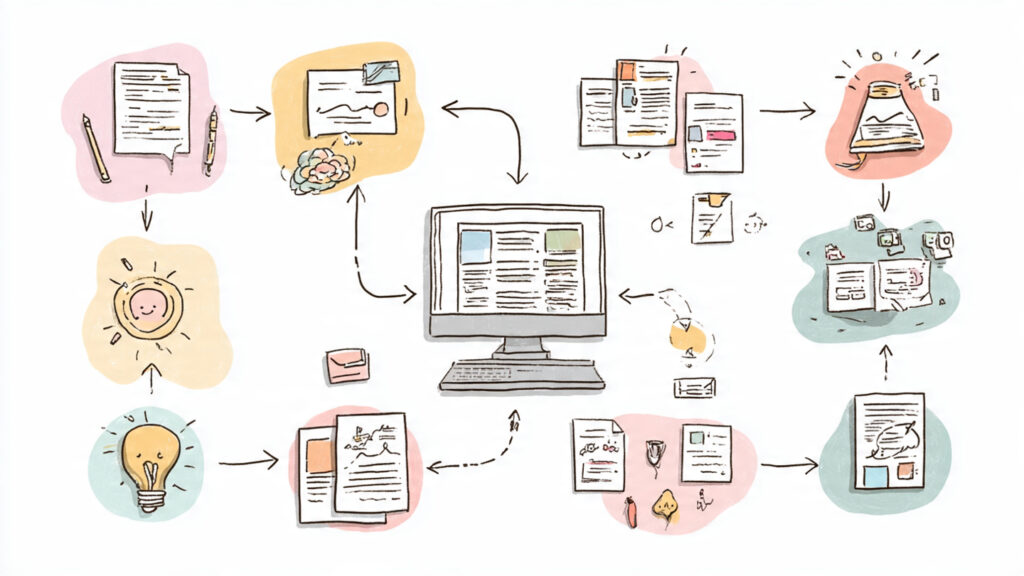
People are using AI to write blog posts, email sequences, social captions, and newsletters. The appeal is obvious: produce content in minutes instead of hours.
Why people love it: Create a month’s worth of social posts in an afternoon. Draft a complete email sequence while your coffee gets cold. If you struggle with writer’s block, AI gives you something to start with.
Why it works for low-energy users: On your worst days, feed AI a few bullet points and get back something useable. You’re not starting from zero. The heavy lifting is done.
The hidden energy costs: AI writes like AI. Generic. Robotic. If you just copy and paste, your content will be forgettable at best. You still need to edit, strategize, and inject your actual voice into the work. Some days that’s easy. Other days it feels like pulling teeth.
Realistic potential: Good if you keep it simple. Creating content for yourself or helping small business owners who need decent regular posts? This works. Just don’t expect to copy-paste your way to success.
Faceless YouTube Channels
This trend exploded in 2024 and hasn’t slowed down. Create channels using AI voiceovers, stock footage, and automated editing. No camera. No showing your face. Just content that (theoretically) earns ad revenue while you sleep.
Why people hype it: The promise of passive income is intoxicating. Create videos once, earn money forever. Plus, no performance anxiety.
The actual workload: You need consistent uploads to grow. Regular research, script writing (even with AI help), video editing, thumbnail creation, SEO optimization, and keeping up with YouTube’s ever-changing algorithm. You’re competing with millions of other channels using the exact same AI tools.
Realistic potential: Possible, but not low-energy for beginners. If you genuinely enjoy creating video content and you’re willing to stick with it for 6-12 months before seeing real money, go for it. Looking for quick wins or something you can do on bad days? Skip it.
AI Art and Print-on-Demand Shops
Generate designs using AI art tools, slap them on t-shirts, mugs, and phone cases, list them on print-on-demand platforms, and wait for sales. Sounds perfect for creative people who don’t want inventory or shipping hassles.
The pros: Genuinely fun if you like visual play. No technical design skills needed. Simple setup. Once products are listed, they can sell without you touching them again.
The cons: The market is saturated. Everyone discovered the same tools at once. Unless you’re targeting very specific niches with designs that resonate with real people, your generic AI cat wearing sunglasses won’t sell. You also need consistency. One-off designs rarely perform. You need a cohesive shop with multiple related products.
Realistic potential: Good if you stick to small, passionate niches. Don’t try to appeal to everyone. Find the underwater basket weaving community or vintage camper enthusiasts or whatever tiny internet corner you understand. Create specifically for them.
AI Prompt Packs and Digital Templates

This one’s interesting because it’s meta. You’re selling tools that help other people use AI better. Prompt collections for writing, business planning, content creation, research. Templates for organizing ideas, planning projects, or automating tasks.
Why this exploded: People buying AI tools quickly realize they don’t know how to use them effectively. They waste time fighting with vague results. They want someone to hand them the exact prompts that work.
Why it works for low-energy creators: You build it once. Test it. Refine it. Then it sells on repeat. You’re not trading hours for dollars. You’re not creating new custom work for every customer. It’s genuinely closer to passive income than most “passive income” ideas.
The hidden energy: You need to actually test your prompts. You need clear instructions. Your customers need to understand the transformation they’re buying. If your prompt pack is just a list of vague suggestions, nobody’s going to buy it twice or recommend it to others.
Realistic potential: Excellent for people who understand specific problems. If you know what home-based entrepreneurs struggle with, what small business owners need but can’t afford to outsource, or what people managing chronic conditions wish they had help with, you can create genuinely useful tools.
AI Chatbot “Businesses”
The pitch: set up AI chatbots for businesses to automate customer service, lead generation, or appointment booking. Or create your own chatbot that runs some automated business model.
The hype: “Make money while you sleep! Your chatbot works 24/7!”
The reality: You need traffic. A chatbot with no visitors is expensive software sitting idle. Setup takes significant time if you don’t already understand the technology. Chatbots need constant tweaking because they don’t magically handle every situation.
Building chatbots for other businesses? You need to find clients and convince them they need your service. That’s sales. That’s relationship building. That’s energy.
Realistic potential: Overhyped for most people. Unless you genuinely enjoy the technical side and you’re good at client relationships, skip it.
AI-Generated Ebooks and Mini Courses
Use AI to outline, draft, and structure digital books or short courses. Sell them on Amazon, Gumroad, your own website, wherever. The publishing barrier has never been lower.
The pros: You can produce an entire ebook in a weekend. The format is flexible. People still buy digital information products.
The cons: The market is flooded with bland, generic AI-written ebooks that all say the same things in slightly different words. Amazon’s cracking down on low-quality AI content. Readers spot generic garbage from a mile away.
Realistic potential: Good if you’re tying content to real problems and your actual experience. Writing about managing side hustles with chronic fatigue because you actually live that reality? Your ebook will sound different than the 47 generic “passive income” books AI churned out. Use AI for structure and drafting, but make it genuinely yours.
AI Task Automation (Backend Business Support)
This one flies under the radar, but it’s solid. Use AI tools to handle administrative tasks for small business owners. Email management, calendar organization, data entry, research, basic customer communication. You’re offering virtual assistant services enhanced by AI efficiency.
Why it works: Small business owners are drowning in administrative tasks they hate. They can’t afford full-time employees but desperately need help. If you can reliably handle their backend chaos, they’ll pay you monthly.
The energy factor: Most work happens in small chunks. You’re not performing or creating. You’re organizing, responding, and managing systems. On low-energy days, you can still process emails or update spreadsheets.
Realistic potential: Good if you enjoy behind-the-scenes work and you’re naturally organized. Not glamorous, but stable income with the right clients.
What’s Mostly Hype (Save Your Energy)

Not everything deserves your time. Some ideas sound better than they are. Here’s what to avoid unless you have energy and money to burn.
One-Click “AI Passive Income” Websites
You’ve seen the ads. “AI builds your entire business in one click! Just sit back and watch the money roll in!” These are website templates filled with generic content, connected to affiliate programs, supposedly optimized for SEO.
The reality? They’re not passive. They need constant updates, promotion, and traffic generation. Nobody’s going to magically find your generic website among millions of others. Google’s algorithms recognize low-quality content. You’ll spend more time trying to make it work than building something real from scratch.
Bottom line: Not good for beginners or low-energy users. If you see “passive income website in one click,” run.
AI Trading Bots and Crypto Bots
Automated bots that supposedly trade stocks or cryptocurrency for you while you sleep, generating consistent profits with no effort.
Here’s the truth: these are high-risk financial tools requiring constant oversight. Markets change. Algorithms need adjusting. One bad day can wipe out weeks of gains. Unless you deeply understand trading, have money you can genuinely afford to lose, and can handle watching your balance fluctuate wildly, this isn’t for you.
Bottom line: Not disability-friendly. Not beginner-friendly. High risk, high stress, high energy requirement despite the promises.
Mass AI Ebook Farms
Pump out hundreds of AI-written ebooks on trending topics, list them all on Amazon, and hope a few hit. Quantity over quality.
Amazon’s actively cracking down. They’re flagging obvious AI content. They’re limiting how many books you can publish. The quality is so terrible that readers are getting savvy about avoiding these books entirely.
Bottom line: Not worth your time or energy. Even if you make quick money, it’s not sustainable.

“Set It and Forget It” AI Money Machines
Any product, course, or system promising you can build something once and never touch it again while money flows in automatically.
This doesn’t exist. Every business requires maintenance. Every income stream needs attention. The ones that come closest to passive (like certain digital products) still require initial work, updates, customer service, and occasional marketing.
Bottom line: If you see this promise, it’s a lie designed to sell you something.
The Best AI Side Hustles for Low-Energy Entrepreneurs

Now let’s talk about what actually works when you’re managing limited energy, unpredictable health, or just the general exhaustion of modern life. Everything in this section is designed to be doable even on difficult days.
AI-Powered Templates and Prompt Packs
This is my top recommendation for a reason. You create organized collections of prompts, templates, or systems that solve specific problems. Once they’re built and tested, they sell on repeat without requiring new energy from you.
Why it’s perfect: You can work on these from bed or your couch. You don’t need to show your face. You don’t need to be “on” for anyone. You can build them in small chunks over weeks instead of grinding them out in marathon sessions. They’re reusable and evergreen. The problems they solve don’t expire.
What to create: Prompt packs for content creation. Templates for organizing business tasks. Systems for automating repetitive work. Checklists for managing projects. Anything that takes the thinking out of something people do regularly.
The key: Focus on transformation, not just information. Your customer isn’t buying a list of prompts. They’re buying the result those prompts create.
AI-Assisted Content Creation for Small Businesses

Offer simple content packages to small business owners who know they need regular posts, emails, or blog updates but don’t have time to create them. You use AI to speed up the process, but you’re the human making everything sound right and fit their brand.
Why it’s low-energy friendly: You’re creating short pieces, not novels. Instagram captions, email newsletters, quick blog posts. Most work happens in 15-30 minute chunks. Batch similar tasks on good days and coast on easier edits during harder days.
The value: Small business owners will pay $200-500 monthly for consistent, decent content. You’re not competing with big agencies. You’re offering personal service they can actually afford.
How to start: Reach out to local businesses you genuinely like. Offer a trial month at a discount. Let your work speak for itself.
AI Research Micro-Services

Use AI to gather information, compare options, summarize long documents, or organize research for busy professionals. Compare software tools, research competitors, summarize industry reports, or compile data for decision-making.
Why it’s ideal: Low-pressure work. You’re gathering and organizing, not creating. On slow days, you can still run searches and compile results. No performance required.
The market: Busy entrepreneurs, consultants, small business owners, and professionals who need information but lack time to dig through it themselves. They’ll pay $50-150 for focused research projects.
AI Support for Other Home-Based Entrepreneurs
Offer your organizational skills and AI knowledge to help other people start their businesses. Set up their digital product shops. Create their first automated email sequences. Build their simple content calendars. Organize their chaos into workable systems.
Why this works: You’re helping people who are exactly where you were six months ago. You understand their struggles. You know what matters and what’s just noise. You can offer “starter packages” that give people a genuine foundation without overwhelming them.
The beauty: You’re selling practical systems, not dreams. Less pressure to promise massive results. More focus on making someone’s life easier.
AI-Enhanced Digital Downloads
Create planners, worksheets, checklists, roadmaps, and mini-guides that solve real, specific problems. Use AI to help with structure and ideas, but make them genuinely useful based on what you know people struggle with.
Examples: Budget planners for variable income. Meal planning templates for people managing inflammation. Daily routine guides for low-energy days. Project organization systems for scattered thinkers.
Why they work: People love buying tools that make their lives easier. If your product genuinely helps someone stay organized, save time, or feel less overwhelmed, they’ll buy it and recommend it.
How to Choose the Right AI Side Hustle for You
Stop letting other people tell you what you should try. Here’s how to figure out what might actually work for your life.
Ask yourself:
Can I do this on a low-energy day? If the business model requires 100% capacity every time, it’s not sustainable. You need something that bends when you need it to.
Does this use skills I already have? Don’t try to become someone different. Organized? Lean into systems and templates. Understand people’s problems? Focus on solutions. Good with words? Stick with content. Work with what you’ve got.
Do I enjoy doing just a little bit of it? You don’t need to love every second, but if you genuinely hate the actual work, you won’t stick with it long enough to see results. Find the overlap between what you’re okay at and what you can tolerate doing regularly.
Can I make money without showing my face or recording video? If performing stresses you out, choose options that let you stay behind the scenes. No rule says you have to be the face of your business.
Can I make it simple instead of overwhelming? Complex systems fail when energy drops. Simple systems keep running. Choose the version that doesn’t require 47 steps to complete one task.
If you answer yes to most of these, try the idea for seven days. Actually work on it. See how it feels. See if you can sustain it.
If you answer no to most of these, skip it. No guilt. No pressure. No forcing yourself to fit someone else’s blueprint.
How to Use AI Prompts to Make Everything Easier
Here’s what I’ve learned after building and using AI tools for the past year: AI isn’t magic, but it’s genuinely helpful when you use it right.
AI handles the thinking when your brain fog hits hard. Instead of staring at a blank screen, you give AI context and let it generate options. You’re not writing from zero. You’re editing from 60%.
AI breaks overwhelming projects into tiny, manageable pieces. Ask it to turn your big idea into a step-by-step plan. Suddenly you’re not facing a mountain. You’re facing a list of small tasks you can tackle one at a time.
AI writes the boring stuff you just need done. Email responses. Product descriptions. Social media captions. The work that needs doing but doesn’t need to be brilliant. AI handles it well enough, giving you energy for the parts that actually matter.
AI helps you test ideas before you waste energy building them. Draft product descriptions, write sample posts, or create mock-up content to see if an idea resonates before committing weeks of work.
AI fills your gaps. Not great with tech? AI explains it simply. Struggle with writing? AI gives you solid drafts. Terrible at organization? AI creates systems for you. You don’t need to be good at everything anymore.
The tools that make all of this easier aren’t just random ChatGPT conversations. They’re organized, tested prompt collections built specifically for people who need simple systems that work on hard days. That’s what I’ve been building, collections that remove the guesswork and just give you something that works.
2026 Can Be Your Year (Even With Limited Energy)

Let me be clear: you don’t need to hustle.
You don’t need to work 80-hour weeks. You don’t need to sacrifice your health for income. You don’t need to feel guilty every time you rest.
You also don’t need a massive audience to start making money. You don’t need thousands of followers or a viral post or some perfect business plan. You need something simple that works for one real person. Then another. Then another.
AI makes the hard parts easier. It doesn’t do everything for you, but it removes enough friction that starting becomes possible even on days when everything feels heavy.
Start small. Build at your own pace. Rest when you need to. Adjust when life requires it. This isn’t about perfection. It’s about progress you can actually sustain.
Pick one option from this article. Not three. Not five. One.
Try it for a week and see what happens.
That’s how this actually works.
